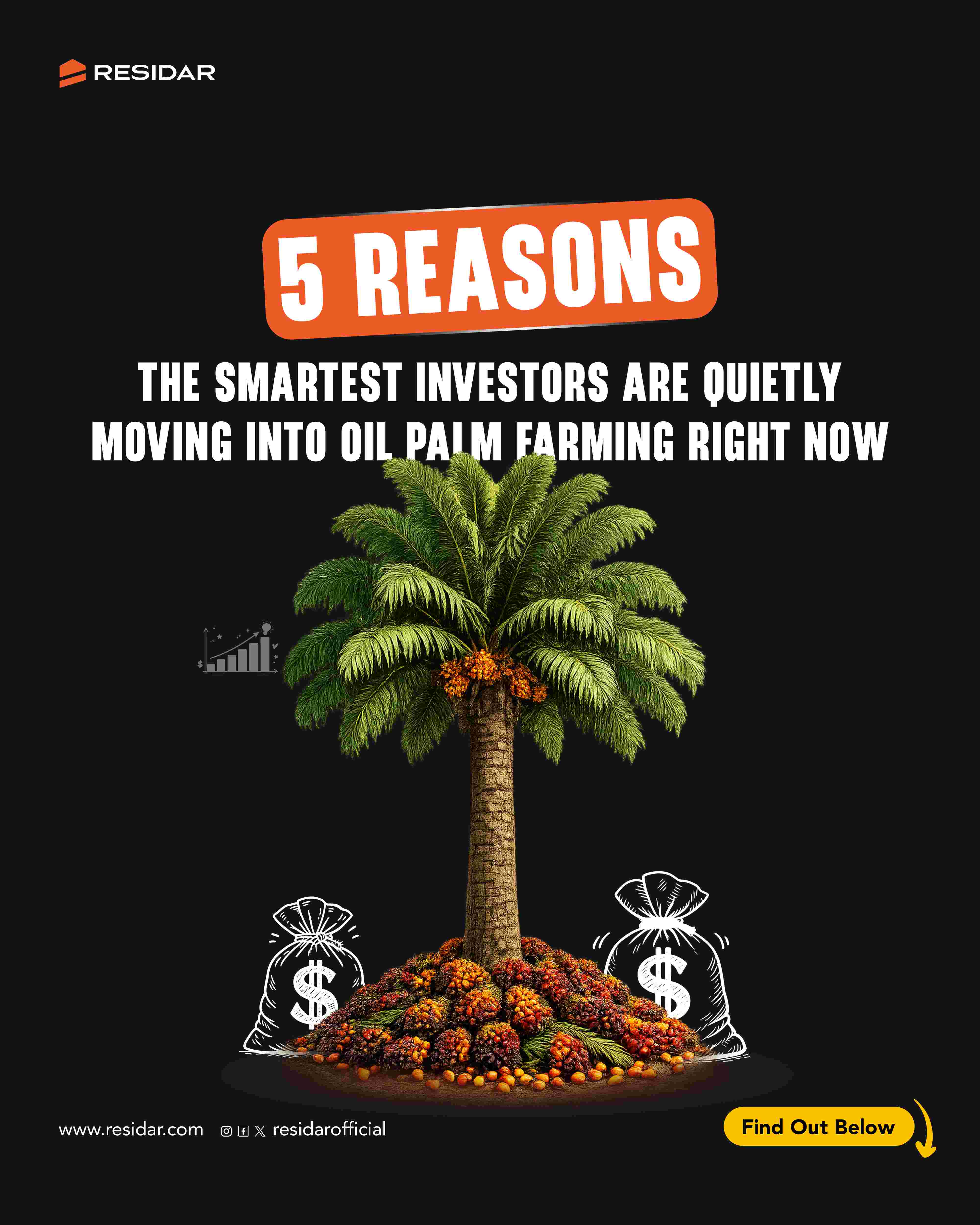
5 Reasons Smart Investors Are Quietly Moving Into Oil Palm Farming in 2026
While many chase volatile stock and crypto markets, savvy investors are quietly shifting their attention to oil palm farming. This isn’t a passing trend, it’s a structural shift in agriculture and wealth creation.
Oil palm accounts for over 35% of global vegetable oil production, yet uses less than 10% of the land required by other major oil crops like soybean or sunflower. That efficiency, combined with growing global demand, makes oil palm one of the most compelling investment opportunities today.
Here’s why smart investors are moving into this sector in 2026.
1. Global Demand for Palm Oil Has No Ceiling
The world’s population is projected to reach 9.7 billion by 2050, and with it comes rising demand for:
Cooking oil and edible products
Processed foods
Cosmetics and personal care
Biofuels
Unlike some commodities that fluctuate with market trends, palm oil demand continues to grow year after year. When you invest in oil palm, you are investing in a commodity that will always be needed.
2. Oil Palm Produces More Oil Per Hectare
Oil palm is the highest-yielding oil crop in the world. It produces up to 10 times more oil per hectare than soybean or sunflower, meaning:
Less land required
More output per hectare
Stronger profit margins
Efficiency matters in farming, and oil palm delivers more value from every square meter of land.
3. Every Part of the Palm Tree Generates Revenue
Oil palm isn’t just about the fruit. Investors benefit from a vertically integrated business model:
Palm fruit to edible palm oil
Kernel to kernel oil
Trunks, fronds, and waste to biomass fuel and organic fertilizer
Nothing is wasted, and multiple revenue streams reduce risk while increasing returns.
4. Nigeria Offers a Massive Supply Gap
Once the world’s largest palm oil producer, Nigeria now imports what it used to export.
This supply-demand gap creates a unique opportunity for early investors. By planting and managing oil palm estates now, you position yourself to capture both domestic and export market value.
5. Long-Term, Recurring Returns
Oil palm is not a one-off investment.
Matures in 3–4 years
Produces harvests every season for 20–30 years
Generates predictable, recurring income
Investing in oil palm is building a long-term income structure, not chasing short-term gains.
Where Palm Haven Fits In
Palm Haven offers two premium investment locations in Nigeria:
Series 1: Wasimi, Ado-Awaye, Oyo State
Agriculturally rich land with a Certificate of Occupancy
On-site processing mill for palm oil production
Full management support for investors
Series 2: Omotosho, Okitipupa, Ondo State
Located in Nigeria’s historically productive palm belt
Fertile soil and high yields
Proximity to coastal trade routes for domestic and export markets
Palm Haven gives investors a structured, managed, and high-yielding entry into oil palm farming, combining strong returns with real-world impact.
Take Action Before the Window Closes
The question isn’t whether oil palm farming makes sense, the data settled that years ago. The question is whether you act before the window closes or read about it afterward.
Get your Palm Haven Investment Brief today. Discover:
The land, the numbers, and the structure
How to enter from day one
Expected yields, profits, and long-term income
Invest in a commodity that grows quietly in the ground, and builds wealth for decades.
Newsletter
Subscribe our newsletter to get our latest update & news