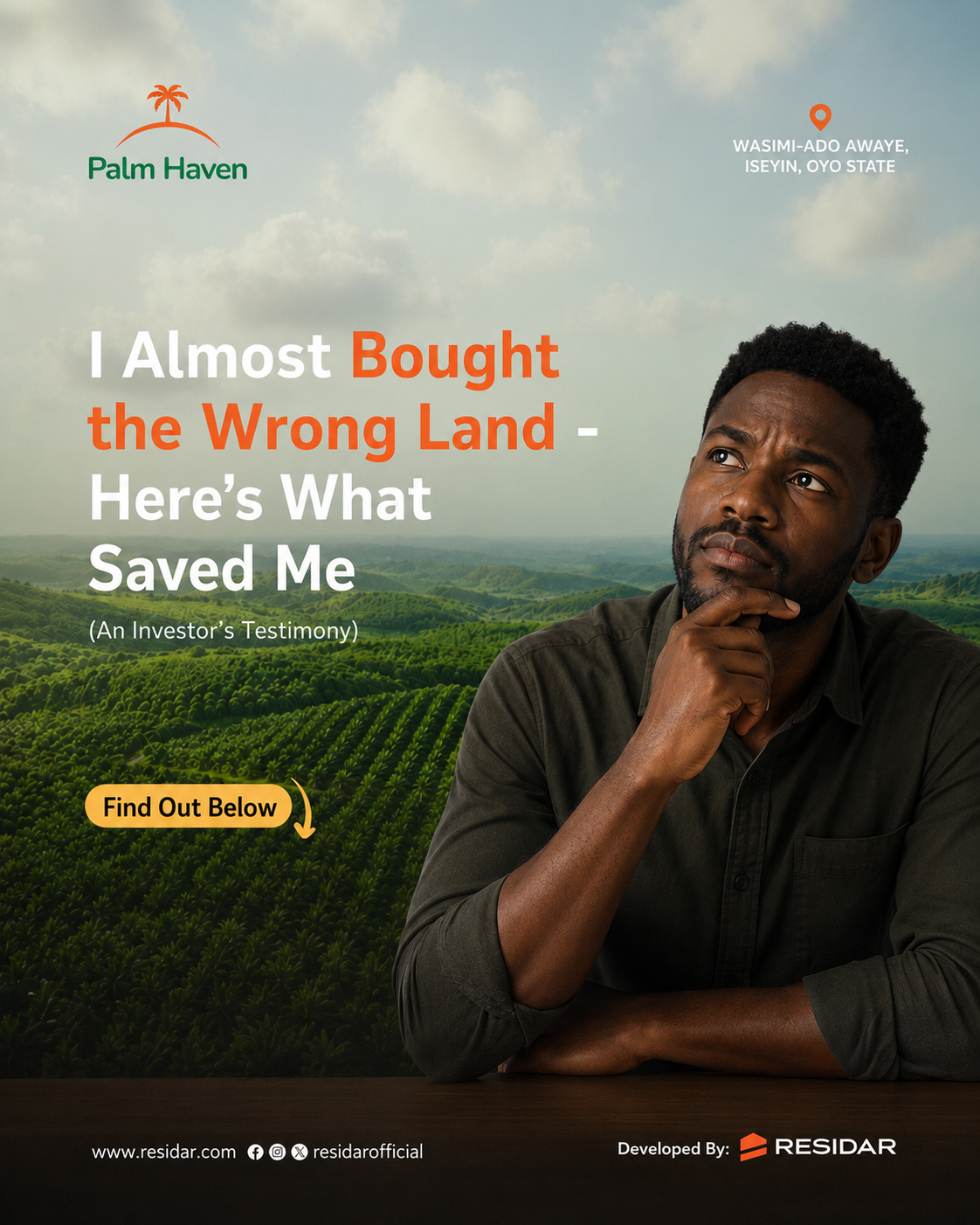
I Almost Bought the Wrong Land - What a Client’s Experience Taught Me About Real Estate Investment
A client recently shared a story with us that stayed on our minds for days. Not because it was dramatic, but because it was honest, and very relatable for many people trying to invest in land today.
“A few years ago, I almost bought a piece of land simply because the price sounded good.”
That’s how the conversation started.
No strategy.
No real understanding of the area.
Just pressure, urgency, and the fear of missing out on a “cheap deal.”
Thankfully, he paused before making payment.
And according to him, that pause saved him from making a very expensive mistake.
Not Every Cheap Land Is a Good Investment
This is one of the biggest misconceptions in real estate today, especially in Nigeria.
People often assume that because land is affordable, it automatically means it’s a smart investment. But experienced investors know that cheap land can sometimes become expensive regret.
Some plots have:
- No proper access roads
- No surrounding development
- No real demand
- No economic activity nearby
- No long-term growth potential
In many cases, people buy and wait for years hoping something eventually happens in the area.
Sometimes, nothing does.
The Question Smart Investors Ask
During the conversation, the client said something that completely changed the way he now evaluates property investments:
“What is this land connected to?”
That question matters more than price.
Because land only becomes valuable when it is tied to something people genuinely need: housing, infrastructure, commerce, agriculture, industry, or production.
Real demand creates real value.
That realization is what shifted his attention toward productive farmland and agricultural real estate.
Why Oil Palm Farming Started Making Sense
According to him, oil palm farming stood out because it isn’t built on speculation alone.
Palm oil is already part of everyday life.
It is used in:
- Food production
- Cooking oil
- Cosmetics
- Soap manufacturing
- Industrial processing
In other words, the demand already exists.
Unlike some land investments where people are simply hoping an area develops in the future, oil palm farmland is connected to an active and growing market.
That difference matters.
The Rise of Agricultural Real Estate in Nigeria
Over the last few years, more investors have started paying attention to agricultural real estate, especially managed farmland projects.
The reason is simple:
People are becoming more interested in investments tied to production and long-term value creation.
Nigeria’s agricultural sector continues to present major opportunities, particularly in oil palm farming, where local demand still exceeds supply.
For many investors, it is no longer just about owning land.
It is about owning land that works.
Why Palm Haven Resonates With Some Investors
This is part of the reason projects like Palm Haven continue to attract attention.
Palm Haven is not positioned as “cheap land.”
Instead, it is designed around long-term agricultural production through oil palm farming, giving investors access to productive farmland tied to a real commodity market.
For investors looking beyond speculation, that structure makes a difference.
The client ended the conversation with a simple statement:
“I stopped asking how cheap the land was. I started asking what the land could actually do.”
That mindset shift is something many investors may need today.
Because sometimes, the most expensive investment is not the land that costs too much.
It is the land that goes nowhere. See details of Palm Haven investment.
Newsletter
Subscribe our newsletter to get our latest update & news